INVESTIGATION ·
The Cascade: the ICJ never found a 'plausible genocide' — and the Guardian just corrected the same false claim a fifth time
The court found a plausible right of Palestinians to be protected from genocide — not a plausible case that genocide is occurring. Its former president, Joan Donoghue, corrected the press shorthand on the record in 2024 — yet on 19 May 2026 the Guardian fixed the same false sentence a fifth time.
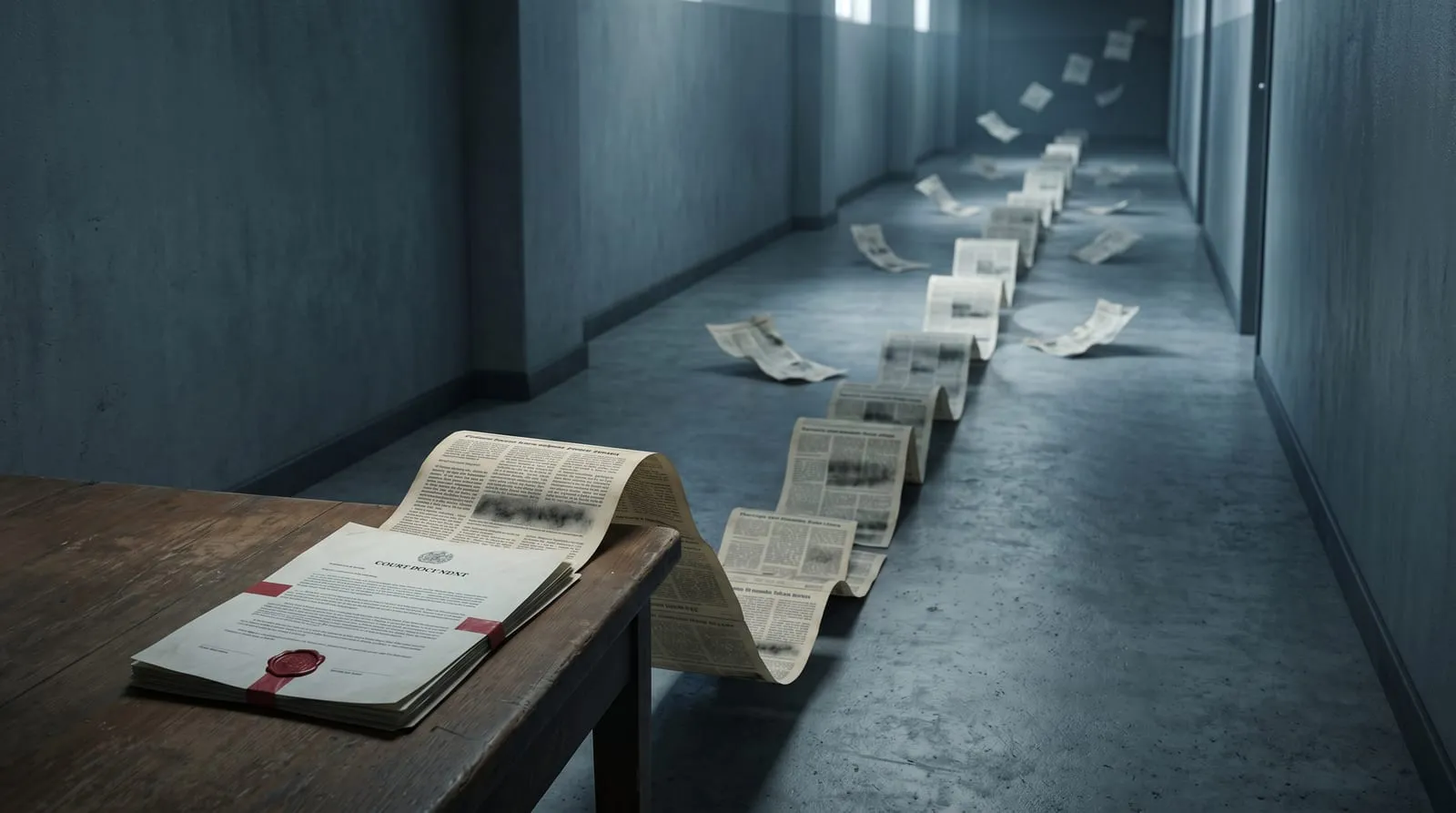
The ICJ's 26 Jan 2024 order found a plausible RIGHT of Palestinians to be safe from genocide — not a plausible case of genocide. The court's own former president, Joan Donoghue, said so on the BBC. On 19 May 2026 the Guardian fixed the same error a fifth time.
The International Court of Justice (ICJ) never found that Israel is plausibly committing genocide in Gaza. On 26 January 2024 it issued a provisional-measures order — an early, emergency step, not a verdict on the merits. The Atlantic Council’s verbatim render of the order records the court’s actual words. The court found “at least some of the rights claimed by South Africa and for which it is seeking protection are plausible.” That is a plausible right of Palestinians to be protected from genocide — not a plausible case that genocide is occurring.
We know they are not the same, because the judge who presided over that order said so — on camera, to the press. Joan Donoghue led the ICJ when the order issued; by her BBC HARDtalk interview on 25 April 2024, she was its former president. She corrected the framing directly: “the shorthand that often appears — which is that there’s a plausible case of genocide — isn’t what the court decided.” She went further: “it didn’t decide that the claim of genocide was plausible.”
And yet on 19 May 2026 the Guardian corrected the same false sentence for the fifth time. “Plausible genocide” is not a ruling. It is a media artifact — a sentence that survives mostly because each writer copies the one before. Some jurists did read the order and still reached that phrasing; the judge who presided over it says that reading is wrong. Either way, a sentence corrected five times in one newspaper is not propagating on evidence. That is a consensus cascade in its purest form — a false claim that keeps its authority only because so many keep repeating it. The Guardian’s fifth fix is the receipt.
What the court actually found on 26 January 2024
A provisional-measures order is what a court issues at the very start of a case. Its job is narrow: keep a dispute from getting worse before it can be heard. It is not a judgment. To win one, a state must clear three low bars.
As the Atlantic Council noted the same day, the court cleared all three:
- Prima facie jurisdiction — a first-look basis to hear the case.
- South Africa’s erga omnes partes standing — its right to sue as a fellow party to the Genocide Convention.
- “At least some of the rights claimed by South Africa … are plausible” — worth protecting while the case proceeds.
That word — rights — is load-bearing. The plausible right the court named belonged to the Palestinian population. It was their right to be protected from acts of genocide.
It is a threshold about whose interests deserve interim protection. It is not a finding that Israel is plausibly committing genocide.
The order was not toothless, and we do not pretend it was. The court also found a real, imminent risk of irreparable prejudice to that plausible right. It ordered Israel to take provisional measures: prevent genocidal acts, prevent and punish incitement, and let humanitarian aid reach Gaza. Those are binding interim steps. But an order to guard against a risk is not a ruling that the risk has come true. Naming a plausible right — and a real risk to it — is still not a finding that genocide is plausibly occurring.
The Atlantic Council’s experts said the same in plain words. The court, in their summary, “does not have the evidence to decide whether or not Israel has committed genocide in Gaza.” It did not answer that question. It was not asked to.
So let us be precise about the boundary. We do not say the court “cleared” Israel, “exonerated” Israel, or “absolved” Israel. It made no merits finding either way, and the case is still pending. The court issued further provisional-measures orders on 28 March and 24 May 2024, and none found that genocide was occurring. The only claim the record supports is this: the court made no finding that genocide is plausibly occurring.
Anyone who tells you the ICJ found a “plausible genocide” has inverted the finding. They have turned a finding about Palestinian rights into a finding about Israeli guilt. That inversion is the error. It has a long paper trail.
The court’s own president corrected the press — and the correction was ignored
This story should have ended in April 2024. The judge who chaired the order went on the BBC. She said the media shorthand “isn’t what the court decided.” There was no ambiguity left. Donoghue did not soften it or bury it in a footnote.
CAMERA UK documented this from the broadcast. She framed her own remarks as a correction: “this is something where I’m correcting what’s often said in the media — it didn’t decide that the claim of genocide was plausible.”
She was not minimizing the order. In the same interview Donoghue affirmed the court had found a risk of irreparable harm to the Palestinians’ right to be protected from genocide. What she rejected was only the leap from that finding to a plausible case of genocide — the exact leap the press kept making.
This is authority pointing the other way. The usual pattern in Israel coverage runs one direction. An institutional brand — a UN rapporteur, a court, a marquee newspaper — lends its weight to a claim that could not survive on its own. Here the court’s most senior available voice was taking that weight back.
The honest move is simple. Once the president of the court tells you that you have her ruling backwards, you stop repeating the thing she just disowned. Instead the sentence kept reappearing.
CAMERA’s April 2024 catalog of outlets that ran the “plausible genocide” framing already named the Guardian. Its editorial board had written, days after the order, of “a plausible claim of the Gazan population being decimated.” A correction on the record from the deciding judge did not stop the recurrence. It barely dented it.
That is the tell of a claim that travels on consensus, not on evidence. New facts do not update it. Even strong ones do not. The thing propagating was never the fact in the first place.
Five corrections in one newspaper: the cascade, audited
This is a cascade story because of the repetition in one outlet. One mistake is a mistake. Five corrections of the same mistake at the same newspaper is a mechanism. Each writer reaches for the familiar phrase: “the ICJ found a plausible risk of genocide.” It is what they have read a hundred times.
The phrase has become its own evidence. Social proof has replaced the source document.
CAMERA UK has logged the run. But you do not have to take a tracker’s word for the count. Each fix is printed on the Guardian’s own page, in its own correction footnote. The first correction came in May 2024, after a 6 May op-ed by Miqdaad Versi claimed the ICJ “considered Israel to be plausibly committing genocide.” CAMERA UK cited Donoghue’s clarification, and the paper amended it. The Guardian’s own footnote on that op-ed still carries the fix. The paper wrote that the court “did not rule on the merits.” It found only a “real and imminent risk of irreparable harm” to the Palestinians’ plausible right to be protected from genocide.
Two more came between. In summer 2024 the Guardian amended columns by Arwa Mahdawi and Mona Chalabi, moving the “plausible genocide” wording toward the rights-based formula. In September 2025 it corrected a 5 September news report by William Christou. That report had the court ruling “the claim of genocide was plausible”; the fix changed it to the Palestinians’ “right to be protected from genocide” being at “imminent risk.”
The fourth came in November 2025. A 1 November Guardian article asserted the court had found Israel “to have a plausible case for genocide.” The Guardian corrected it to “an immediate risk to Palestinians’ right to be protected from genocide.” Four fixes came before the fifth.
The fifth is the cleanest specimen yet. On 19 May 2026 the Guardian ran a book review by the historian Avi Shlaim. The book was Omer Bartov’s Israel: What Went Wrong. Two watchdogs logged it: CAMERA UK and its US counterpart.
Shlaim’s review stated:
The international court of justice in The Hague found that there was a plausible risk of genocide in Gaza and ordered Israel to take a series of measures to stop it.
After CAMERA’s complaint, the Guardian corrected it. The Guardian’s own amendment footnote, dated 14 May 2026, records the fix on the paper’s own page. The new sentence read:
The international court of justice in The Hague found that the right of Palestinians in Gaza to be protected from acts of genocide was at risk.
The corrected sentence is the accurate one. It is, almost word for word, what the court actually found.
The original was the laundered one. The error belongs to the review, written by Shlaim. It was not Bartov’s sentence. We name the writer, not the author under review.
Keep this tally separate from another one. CAMERA has tracked a parallel series of BBC corrections on the same error. The “fifth” here means the Guardian’s own running count — five fixes after CAMERA UK communications. Two outlets, two ledgers, one false sentence — exactly what a cascade looks like across a media ecosystem.
Why the inversion matters — and where the laundering ultimately leads
This is not pedantry about legal words. The “plausible genocide” phrase is one of the most cited props in the campaign against Israel. That campaign brands Israel’s war against Hamas as genocide.
The campaign runs on one move throughout. A procedural or unverified input is dressed up as a settled finding. It is passed up the chain until it reads as fact.
Look at the inputs. The casualty figures behind the genocide narrative come from the Hamas-controlled Gaza Ministry of Health. Those numbers are not independently verified. The Henry Jackson Society’s Andrew Fox has documented methodology problems in those figures — natural and pre-war deaths counted as war dead, and demographic ratios that do not add up.
The legal gloss comes from a misread provisional order. Each borrowed credential covers for the weakness of the next.
It also matters because of what the cascade leaves out. Hamas started this war on 7 October 2023. It began with the mass murder, rape, and abduction of Israeli civilians. It has fought the war since from inside hospitals, schools, and homes. It uses the Palestinian population as human shields.
That is the single largest reason civilian harm in Gaza is high. It is also the fact most reliably missing from “plausible genocide” coverage. A sentence that recasts a Hamas-started war as an Israeli genocide does specific work. It launders the aggressor’s guilt into the defender’s. It rests on the false authority of a court that made no such finding — no finding that genocide is plausibly occurring.
The court did not do that work. Writers copying writers did.
Where to check every claim
Check the record yourself.
- The Atlantic Council’s same-day analysis of the 26 January 2024 order — for the verbatim “at least some of the rights … are plausible” language. It also carries the experts’ statement that the court did not decide whether Israel committed genocide.
- CAMERA UK’s account of the 25 April 2024 BBC HARDtalk interview — for Donoghue’s words: “isn’t what the court decided … it didn’t decide that the claim of genocide was plausible.”
- CAMERA’s catalog of outlets that spread the framing — which reproduces the same quote.
- The fifth correction of 19 May 2026 and its US-CAMERA corroboration — for the verbatim original and corrected wording, and the Shlaim/Bartov attribution.
- The fourth correction of November 2025 — for the prior instance.
- The first correction of May 2024 — for where the run began.
- The Guardian’s own correction footnotes — on the 6 May 2024 Versi op-ed and the Shlaim review amended 14 May 2026. They are the paper’s own primary record of the first and fifth fixes, independent of any tracker.
Read the order. Read the president’s correction. Then read five years of the same sentence being fixed. Then ask which document is doing the work that documents are supposed to do. Is it the court’s order, or the copy of a copy of a copy?
Methodology and retraction conditions. This is an investigation, and it carries its falsifiers on its face. The central claim is narrow and documentary. It rests on three facts:
- The ICJ’s 26 January 2024 order found a plausible right to protection — plus prima facie jurisdiction and standing — not a plausible case of genocide.
- The court’s former president corrected the press shorthand on the record.
- The Guardian has corrected the same error five times.
We would revise or retract if any of the four falsifiers below were shown to be true.
- The full text of the 26 January 2024 order contains a finding that genocide is plausibly occurring, rather than that a right to protection is plausible.
- A verified, unedited transcript or recording of the 25 April 2024 BBC HARDtalk interview shows Donoghue did not make the correction quoted here, or materially qualified it.
- CAMERA’s tally of five Guardian corrections is shown to double-count, to conflate the separate BBC series, or to otherwise miscount.
- The corrected sentence is attributable to Omer Bartov rather than to Avi Shlaim’s review.
None of those conditions is met on the present record. We do not claim the ICJ cleared Israel. We claim only that it made no finding that genocide is plausibly occurring, and that the case remains pending.
The truth no one wants to print is duller than the lie, and more durable. A court made a narrow procedural finding. Its own president said so out loud. A generation of writers printed the opposite anyway, because it was already in the air.
Naming that is not nitpicking. It is the difference between a legal record and a rumor wearing a robe.
The order says “rights … are plausible.” Donoghue says “isn’t what the court decided.” The Guardian says, five times over, “we got it wrong.” A claim corrected five times in one newspaper is not a finding — it is a habit.
Read with us. Share when we earn it. Tell us when we miss.
Sources (12)
- [1]
CAMERA UK · 2026-05-19 · ✓ verified
The fifth Guardian correction (19 May 2026): the 'plausible risk of genocide in Gaza' wording in Avi Shlaim's review of Omer Bartov's 'Israel: What Went Wrong' was corrected, with four prior fixes linked — the error fixed five times after CAMERA UK communication.
https://camera-uk.org/2026/05/19/guardian-again-corrects-lie-about-icj-genocide-ruling/ archive · 2026-06-03 - [2]
CAMERA · 2026-05-19 · ✓ verified
US-CAMERA corroboration of the fifth-time tally: reproduces the corrected Guardian wording ('the right of Palestinians in Gaza to be protected from acts of genocide was at risk') and attributes the error to Avi Shlaim's Guardian review of Omer Bartov's 'Israel: What Went Wrong'.
https://www.camera.org/article/guardian-again-corrects-lie-about-icj-genocide-ruling/ archive · 2026-06-03 - [3]
CAMERA UK · 2024-04-28 · ✓ verified
Documents former ICJ president Joan Donoghue's 25 April 2024 BBC HARDtalk clarification: 'the shorthand that often appears — which is that there's a plausible case of genocide — isn't what the court decided … it didn't decide that the claim of genocide was plausible.'
https://camera-uk.org/2024/04/28/a-bbc-interview-highlights-multiple-bbc-misrepresentations-of-icj-ruling/ archive · 2026-06-03 - [4]
Atlantic Council · 2024-01-26 · ✓ verified
Verbatim render of the 26 Jan 2024 provisional-measures order — 'at least some of the rights claimed by South Africa … are plausible' — plus experts' read that the court did not decide whether Israel is committing genocide, and affirmed prima facie jurisdiction and standing.
https://www.atlanticcouncil.org/blogs/new-atlanticist/experts-react/experts-react-what-the-international-court-of-justice-said-and-didnt-say-in-the-genocide-case-against-israel/ archive · 2026-06-03 - [5]
CAMERA · 2024-04-30 · ✓ verified
Catalogs the outlets — including the Guardian's editorial board — that ran the 'plausible genocide' framing, and reproduces Donoghue's on-record correction: 'I'm correcting what's often said in the media — it didn't decide that the claim of genocide was plausible.'
https://www.camera.org/article/these-news-outlets-spread-the-plausible-genocide-libel/ archive · 2026-06-03 - [6]
CAMERA UK · 2025-11-09 · ✓ verified
The fourth documented Guardian correction (Nov 2025): a 1 Nov 2025 article claiming the ICJ found Israel 'to have a plausible case for genocide' was corrected to 'an immediate risk to Palestinians' right to be protected from genocide' — establishing the recurrence pattern.
https://camera-uk.org/2025/11/09/guardian-again-forced-to-correct-error-on-icj-ruling/ archive · 2026-06-03 - [7]
CAMERA UK · 2024-05-09 · ✓ verified
The first documented Guardian correction (May 2024): a 6 May Miqdaad Versi op-ed claiming the ICJ 'considered Israel to be plausibly committing genocide' was corrected after CAMERA UK cited Donoghue's clarification — the opening instance of the recurring error.
https://camera-uk.org/2024/05/09/guardian-corrects-erroneous-characterisation-of-icj-ruling/ archive · 2025-11-16 - [8]
CAMERA UK · 2024-08-05 · ✓ verified
Documents the summer-2024 intermediate Guardian corrections to columns by Arwa Mahdawi (27 June) and Mona Chalabi (12 July), which amended the 'plausible genocide' wording toward a rights-based formulation — the second round in CAMERA UK's running count.
https://camera-uk.org/2024/08/05/guardian-correction-on-icj-genocide-ruling-still-gets-it-wrong/ archive · 2025-11-06 - [9]
CAMERA UK · 2025-09-15 · ✓ verified
The third documented Guardian correction: a 5 September 2025 William Christou news report claiming 'the ICJ ruled that the claim of genocide was plausible' was corrected to Palestinians' 'right to be protected from genocide' being at 'imminent risk'.
https://camera-uk.org/2025/09/15/guardian-is-again-forced-to-correct-false-claim-on-icj-ruling/ archive · 2026-06-03 - [10]
Henry Jackson Society · 2024-12-13 · ✓ verified
Andrew Fox's HJS report documenting methodology problems in the Hamas-run Gaza Ministry of Health death toll — inclusion of natural and pre-war deaths, statistically improbable demographic ratios, and unverified Telegram-released lists.
https://henryjacksonsociety.org/publications/questionable-counting/ archive · 2026-06-28 - [11]
The Guardian · 2026-05-09 · ✓ verified
The Guardian's own amendment footnote on Avi Shlaim's review — the fifth correction: an earlier version said the ICJ found a 'plausible risk of genocide in Gaza,' clarified to 'the right of Palestinians in Gaza to be protected from acts of genocide was at risk.'
https://www.theguardian.com/books/2026/may/09/israel-what-went-wrong-by-omer-bartov-review-the-long-view archive · 2026-07-04 - [12]
The Guardian · 2024-05-06 · ✓ verified
The Guardian's own amendment footnote on Miqdaad Versi's op-ed — the first correction: an earlier version said the ICJ 'considered Israel to be plausibly committing genocide,' amended because the court 'did not rule on the merits' of the accusation.
https://www.theguardian.com/commentisfree/article/2024/may/06/keir-starmer-labour-muslim-voters-gaza-sadiq-khan-any-burnham archive · 2026-07-04