COLUMN ·
How Nicholas Kristof's New York Times column buries Hamas's documented sexual violence on October 7
Kristof's column alleging Israeli rapes ran twenty-four hours before the independent Israeli Civil Commission's 430-testimony October 7 report — and a movement used it to play down Hamas's crimes. Its loudest charge, dog-rape, carried no named witness and was already circulating online.
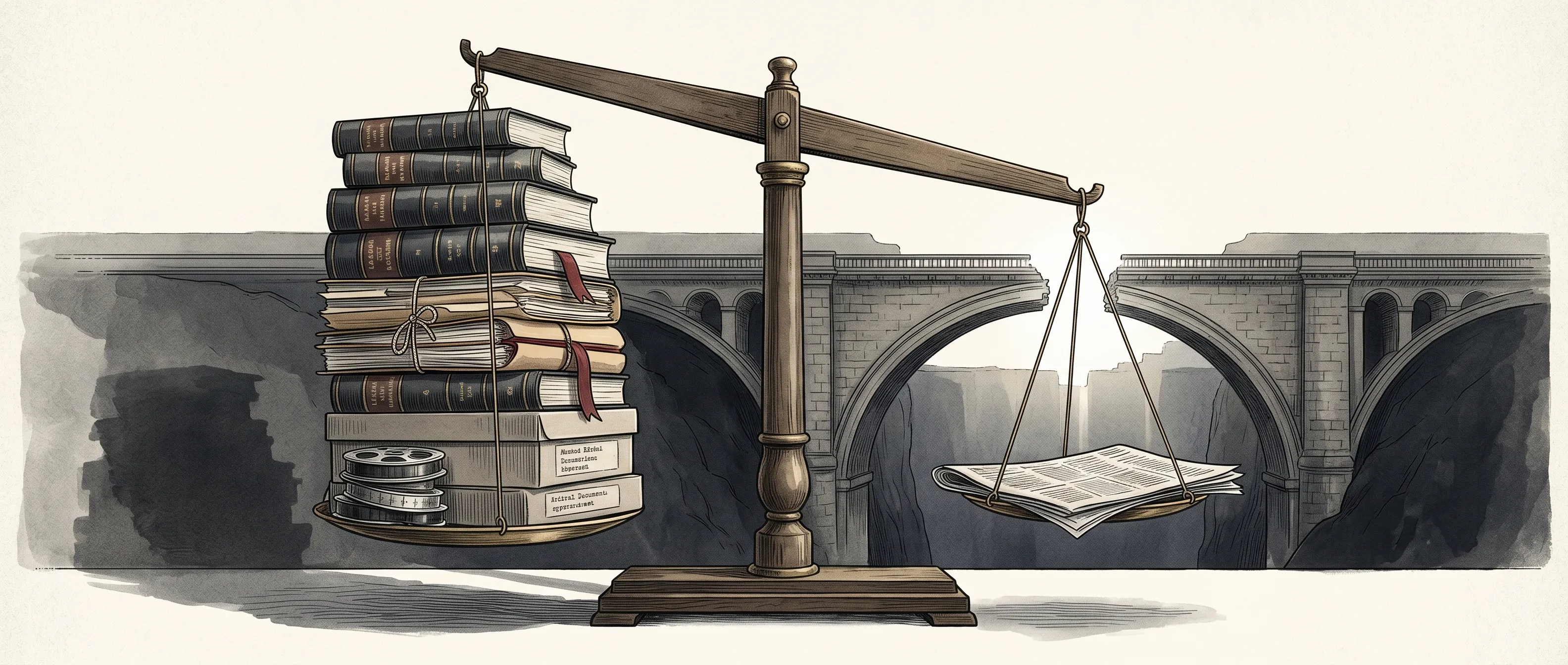
A New York Times column's loudest charge — dog-rape by Israeli guards — had no named witness and had spread online for weeks. It ran one day before the Israeli Civil Commission's October 7 report. A movement used it to make Hamas's crimes look no worse than Israel's.
On Tuesday, May 12, the Civil Commission on October 7th Crimes by Hamas against Women and Children released Silenced No More. The Commission is an independent Israeli civil-society body of legal and academic experts, founded after the attacks by human-rights scholar Dr. Cochav Elkayam-Levy. The 290-page report took two years to build, on more than 10,000 photographs and video segments, 1,800 hours of visual material, and over 430 testimonies. It found that the sexual violence Hamas inflicted on October 7, 2023 was systematic, widespread, and integral to the attacks. CNN summarized the legal findings: war crimes, crimes against humanity, and genocidal acts under international law.
On Monday, May 11 — one day earlier — the New York Times published Nicholas Kristof’s opinion column, The Silence That Meets the Rape of Palestinians. The column charged that Israeli prison guards had systematically raped Palestinian detainees — and its loudest single claim was that they used dogs as instruments of sexual assault. It rested on conversations with fourteen witnesses, many unnamed, and it cited human-rights reports from the UN, B’Tselem, and Euro-Med. But the dog claim — the one that traveled furthest — carried no named first-person source. And one named source who did give a first-person torture account, Sami al-Sai, came with a public record the column left out.
Kristof did not see the report coming; it was not yet public. But within a day, a movement was using his column to blunt it. That is the effect, whatever the intent — and it was not honest reporting. It deserves to be named.
What the column did, and what it did not
One named source the column leaned on is Sami al-Sai, who gave it a first-person account of sexual torture in Israeli custody. His Committee to Protect Journalists profile lists his work for Al Jazeera Mubasher and the local Al-Fajer TV. Al Jazeera Mubasher is the Qatari state broadcaster, run by the government that funds and hosts Hamas. The column named Al-Fajer but not the Qatari tie. The profile itself comes from a press-freedom group. The problem is not that al-Sai is a journalist. It is that the column hid a tie a reader would want to weigh.
In February 2017, Global Voices Advox documented the story as it happened. Al-Sai said Palestinian Authority intelligence had tortured him at Jericho Prison. He then took it back during a Palestinian Journalists Syndicate visit to the prison. After his release, he reversed himself again, saying he had only denied the torture because he was under threat.
Separately, PA intelligence said he had taken funds to recruit for Hamas. Al-Sai admitted to a four-month “project”: he sent Hamas reports with lists of Palestinian political prisoners. He defended it by saying “there is no law that forbids journalists from working with political organizations.” HonestReporting laid out the full record on May 14, in a piece titled “Further Revelations Deepen Questions Over Kristof’s NYT Blood Libel.”
None of this is spin — these are public facts, on the record for nine years. A real source check at the New York Times’ opinion desk would turn them up in one afternoon. The column does not. That was an editorial choice.
Matti Friedman, writing in The Free Press with Dan Senor, noted that Kristof “does not seem to know the identities of some of the people he’s describing.”
Friedman reads Israel-Palestinian sourcing more carefully than most American writers. He allowed one claim looked accurate: “one incident of sexual assault by a settler — not by a uniformed soldier, but an Israeli civilian in the West Bank. That one, as far as I know, is accurate, much to our shame.” The dog allegation was not among the ones he allowed. Israel has since threatened to sue the Times for libel over the column — a separate fight from whether the reporting holds up.
The column did not rest on al-Sai alone. It also pointed to reports from the UN Human Rights Council, B’Tselem, and Euro-Med. Those reports are real, and how Israel treats prisoners is a fair subject for hard reporting. But those reports do not carry the claim the column made loudest. The dog-rape charge traveled through a witness chain the column would not name, and one of its named sources came with a record the column left out. A broad base does not rescue a narrow claim that fails its own sourcing test.
There is a real record of abuse in Israeli detention — and it cuts against the column, not for it. In July 2024, soldiers assaulted a Palestinian detainee at the Sde Teiman facility. Israel’s own Military Police investigated. In February 2025, the military indicted five reservists for aggravated abuse — broken ribs, a punctured lung, a rectal tear. Investigators first suspected rape. In March 2026 the sexual-assault charges were dropped — not on the facts, but because a former military prosecutor had leaked the security-camera footage and tainted the trial. That is a country that films its own detention cells and prosecutes its own soldiers. It is the opposite of a state handing out permission to rape.
How the dog allegation traveled
The dog allegation did not start with Kristof’s reporting. The Jewish Telegraphic Agency traced its path in a May 13 piece.
It first surfaced on April 20, 2026, in a tweet by Rami Elghandour. He was the Rutgers School of Engineering’s scheduled commencement speaker. He wrote that Israel runs “dungeons where they train dogs to sexually assault prisoners.” Rutgers pulled the invitation about two weeks later.
On April 23, the British commentator Owen Jones ran the same allegation on his personal Substack. He called it settled, backed by “overwhelming evidence.” On May 12, Jones posted a follow-up titled “New York Times confirms Israel using dogs to rape.” He treated the Kristof column as proof of the claim he had been pushing for three weeks.
So here is the chain, in public and citable form, before May 11: an engineering-school graduate’s tweet, then a UK commentator’s Substack, then the Times’ opinion page. The column never names this chain. It takes the claim as if its own reporting had found it on its own.
Prior circulation does not by itself make the claim false. It shows the claim was already in the air. Kristof says his interviews found it on their own, and maybe they did. But a columnist who prints a charge already ricocheting through activist media owes readers that context — and owes the loudest version a named source. This one had neither.
What the column serves
Whatever Kristof intended, the column does a specific job: it hands a movement a way to say “both sides.” The move is an old one. A documented evil is about to be named in public. So a contested claim against that evil’s opponent gets raised alongside it.
The two sit side by side. Tired moral math flattens them into one. Both sides do it; everybody’s guilty; let’s all move on. That is the reading Owen Jones reached for the day the report landed — “New York Times confirms Israel using dogs to rape.”
Who does this serve? A movement that needs Hamas’s documented October 7 sexual violence to be no worse than something Israel can be plausibly accused of. The Civil Commission’s Silenced No More report, with its two years of forensic work, makes that need harder to meet. The Kristof column, out twenty-four hours earlier, makes it easier.
The pattern is not new for this columnist either. In 2014, Newsweek showed that the Cambodian activist Somaly Mam had largely faked her first-person human-trafficking testimonies. Kristof had championed her in print.
He admitted as much on his NYT blog, in a post titled “When Sources May Have Lied.” He “now wish[ed] I had never written about her.” Different country, different cause — but the method is worth watching for: heavy moral claims built on a few dramatic witnesses. With Mam, the central witness later collapsed. That is a reason to check this column’s witnesses harder, not to wave them through. And here the loudest claim has no named witness at all. The one named source came with a record the column skipped.
Set the two next to each other. On one side: a mass atrocity, on record after two years of forensic work, 10,000 photographs, and 430 testimonies.
On the other: a column whose loudest charge — the dog claim — has no named first-person source, and one of its named sources came with a record it hid. Its other claims stand or fall on their own evidence. But set beside a documented mass atrocity, one day before that atrocity was named, this does not balance the scale. These two things are not morally equal.
Treating them as equal is not fairness — it is a service to a movement. MissingBridge will not provide that service in any of our coverage.
Where to check every claim
The Civil Commission’s report, Silenced No More, is at civilc.org. Read the methodology section. CNN’s May 12 coverage sums up the legal findings.
Here is where to check the rest:
- HonestReporting’s “Further Revelations Deepen Questions Over Kristof’s NYT Blood Libel” lays out Sami al-Sai’s prior record in detail.
- The 2017 Global Voices Advox piece is the primary source for those same events, written at the time.
- Matti Friedman and Dan Senor’s “How ‘The New York Times’ Laundered a Conspiracy” lays out the sourcing failures.
- Jed Rubenfeld’s “The Case of Israel vs. Kristof Is Dead on Arrival” argues that Israel’s threatened libel suit will not succeed under US First Amendment law. He says plainly this is not a defense of Kristof’s reporting.
- The Jewish Telegraphic Agency’s cascade tracker traces the dog allegation from Rami Elghandour’s April 20 tweet to Owen Jones’s Substack to Kristof’s May 11 column.
- Owen Jones’s May 12 follow-up post shows him citing the Kristof column as confirmation of the allegation he had been making since April.
We name both Free Press pieces for a reason. The Free Press lets its writers disagree on the legal question while they agree on the reporting question. The Times’ opinion section shows no such split on this story right now.
Read the column. Read the commission report. Read Friedman’s piece. Read HonestReporting’s documentation. Then ask which document is doing the work that documents are supposed to do.
The world does not get better when honest people stay quiet about dishonest journalism. It gets worse. The right side of history was never built by staying neutral. It was built by people who said the truth out loud while it was still costly to say.
Sami al-Sai’s record was public. The dog claim’s chain was public. The Civil Commission’s report was public. The Times printed the laundered version anyway. If you can see what is true and you are willing to say so, you are already the movement.
Read with us. Share when we earn it. Tell us when we miss.
Sources (11)
- [1]
Civil Commission on October 7th Crimes by Hamas against Women and Children · 2026-05-12 · ✓ verified
290-page report concluding the sexual violence Hamas inflicted on October 7, 2023 was systematic, widespread, and integral to the attacks; built on 10,000+ photos, 1,800 hours of video, 430+ testimonies.
https://www.civilc.org/silenced-no-more archive · 2026-05-16 - [2]
Committee to Protect Journalists · ✓ verified
CPJ profile lists Sami al-Sai as a freelance reporter for Qatari broadcaster Al Jazeera Mubasher and local broadcaster Al-Fajer TV — the Al Jazeera Mubasher affiliation Kristof's column did not mention.
https://cpj.org/data/people/sami-al-sai/ archive · 2026-03-12 - [3]
Global Voices Advox · 2017-02-27 · ✓ verified
Contemporaneous February 2017 documentation of al-Sai's PA-intelligence torture allegations, his denial before the Palestinian Journalists Syndicate during a prison visit, his reversal after release, and his admitted four-month Hamas prisoner-list project.
https://advox.globalvoices.org/2017/02/27/palestinian-journalist-describes-days-of-torture-mysterious-injections-by-palestinian-intelligence/ archive · 2026-05-16 - [4]
HonestReporting · 2026-05-14 · ✓ verified
May 14 HonestReporting documentation of al-Sai's prior credibility record: 2017 retraction-then-reversal of PA-torture allegations, Hamas prisoner-list activity, and undisclosed Al Jazeera Mubasher affiliation — none of which Kristof's column mentions.
https://honestreporting.com/further-revelations-deepen-questions-over-kristofs-nyt-blood-libel/ archive · 2026-05-15 - [5]
The Free Press · 2026-05-14 · ✓ verified
Matti Friedman and Dan Senor argue Kristof 'does not seem to know the identities of some of the people he's describing'; accept one specific settler-assault claim as accurate, reject most including the dog allegation.
https://www.thefp.com/p/how-the-new-york-times-laundered-a-conspiracy archive · 2026-05-15 - [6]
The Free Press · 2026-05-14 · ✓ verified
Jed Rubenfeld argues Israel's threatened libel suit against the NYT will not succeed under US First Amendment law; explicitly disclaims any defense of Kristof's reporting on the merits.
https://www.thefp.com/p/the-case-of-israel-v-kristof-is-dead archive · 2026-05-15 - [7]
Jewish Telegraphic Agency · 2026-05-13 · ✓ verified
May 13 JTA piece tracing the dog-rape allegation in Kristof's column to its earlier circulation: an April 20 tweet by Rami Elghandour, a disinvited Rutgers commencement speaker, then Owen Jones's April 23 Substack.
https://www.jta.org/2026/05/13/israel/from-rutgers-speaker-to-kristof-column-disputed-dog-rape-claim-against-israel-goes-mainstream archive · 2026-05-15 - [8]
Owen Jones (Substack) · 2026-05-12 · ⚠ disputed
May 12 Owen Jones Substack post titled 'New York Times confirms Israel using dogs to rape' — Jones treats the Kristof column as confirmation of the same allegation he had been publishing on his Substack since April 23.
https://www.owenjones.news/p/new-york-times-confirms-israel-using archive · 2026-05-13 - [9]
The New York Times (Nicholas Kristof's 'On the Ground' blog) · 2014-06-07 · ✓ verified
Kristof's June 7, 2014 acknowledgment that he was misled by Cambodian activist Somaly Mam, whose first-person human-trafficking testimonies Newsweek had established were largely fabricated; he 'now wish[ed] I had never written about her.'
https://kristof.blogs.nytimes.com/2014/06/07/when-sources-may-have-lied/ archive · 2022-03-28 - [10]
CNN · 2026-05-12 · ✓ verified
May 12 CNN summary of the Civil Commission's 'Silenced No More' findings — methodology, evidence base, and the legal conclusion of war crimes, crimes against humanity, and genocidal acts under international law.
https://www.cnn.com/2026/05/12/middleeast/report-sexual-violence-hamas-oct-7-attacks-intl archive · 2026-05-15 - [11]
The Times of Israel · 2025-02-19 · ✓ verified
Israel's Military Police indicted five IDF reservists in February 2025 for aggravated abuse of a Palestinian detainee at Sde Teiman — broken ribs, a punctured lung, and a rectal tear; investigators had initially suspected aggravated sodomy (a charge equivalent to rape).
https://www.timesofisrael.com/5-idf-reservists-indicted-for-severe-abuse-of-palestinian-detainee-at-sde-teiman/ archive · 2026-03-29